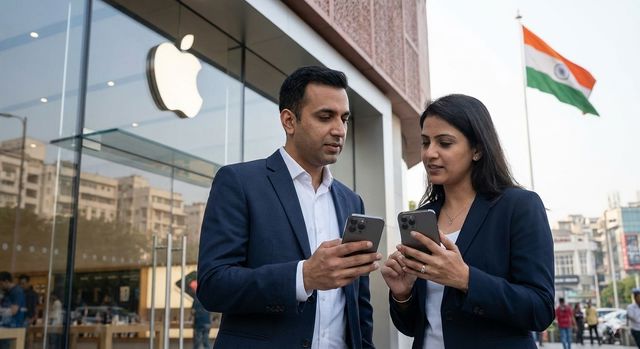
India’s attempt to mandate a government-run cyber safety app on every new smartphone non-removable and pushed via OTA updates sparked one of the country’s biggest digital rights debates in recent years. What began as a national security measure meant to curb device fraud quickly evolved into a public backlash driven by privacy fears, industry resistance, and concerns about state overreach into personal devices. The government ultimately withdrew the mandate, but the incident leaves behind critical lessons about digital governance, user autonomy, and the boundaries of state control in modern mobile ecosystems.
This case is more than a policy reversal. It illustrates how quickly cybersecurity initiatives can collide with fundamental privacy expectations when transparency, consent, and technical safeguards are missing. It also reveals how major tech vendors especially Apple increasingly act as counterweights to government pressure when security architecture and user trust are at stake.
The Mandate | A Wide-Scale Push for Sanchar Saathi
The government ordered all smartphone manufacturers including Apple, Samsung, Xiaomi, and others to pre-install the Sanchar Saathi app on every device. The requirement applied to new phones, devices already in the supply chain, and even models already manufactured but not yet sold. Additionally, users would not be allowed to uninstall or disable the app.
Manufacturers were given 90 days to complete the rollout and 120 days to file formal compliance reports one of the strictest digital directives India has issued in recent years.
Sanchar Saathi’s stated purpose is consumer protection:
- Blocking stolen or lost phones across all networks
- Verifying IMEI authenticity
- Detecting fraudulent SIM cards
- Preventing misuse of telecom identities
- Allowing users to report suspicious activity
The app connects to CEIR, the Central Equipment Identity Register, enabling cross-network blocking of stolen devices and preventing tampered IMEIs from functioning.
The Privacy Clash | Where Security Meets Surveillance Concerns
While the government framed the initiative as fraud prevention, the mandate raised immediate concerns:
The app required extensive permissions
Call logs, messaging capabilities, camera access, and network information capabilities that, if pre-installed at the system level, could provide deep visibility into user activity.
Non-removable government software breaks security expectations
Modern operating systems are designed around clear permission boundaries and user control. Installing a permanent app that users cannot uninstall challenges core privacy assumptions.
Apple resisted the directive
Apple reportedly pushed back strongly, arguing that forcing persistent apps onto iOS violates its security and privacy model. This signals that large ecosystem vendors will defend their architectures even against strong regulatory pressure.
Lack of consultation amplified the backlash
Manufacturers and civil society groups pointed out that the directive was issued without industry input, legal clarity, or transparency about data handling.
Public reaction grew rapidly, and privacy advocates warned that such a mandate even with good intentions could normalize intrusive digital policies.
Within days, the government withdrew the requirement, emphasizing that the app could be deleted and was intended only as a tool for user protection.
What This Incident Teaches Us
Governments can quickly reshape device ecosystems
A single directive nearly compelled every smartphone in the country to carry a state-run app by default. This shows how deeply national policy can influence technical architecture.
Public pressure still matters
Strong backlash, combined with industry resistance, led to a complete reversal demonstrating that user rights and expert concerns can still impact national cybersecurity decisions.
Security must not override privacy
A tool designed to reduce fraud unintentionally crossed into perceived surveillance territory. This incident reinforces a core principle:
cybersecurity without transparent privacy safeguards cannot earn public trust.
Tech companies play a growing role in shaping digital rights
Apple’s pushback highlights how platform security models influence global policy outcomes. In regions where governments demand extensive technical concessions, large vendors can become a stabilizing force.
India’s Sanchar Saathi controversy will be remembered as a case study in digital governance: how an aggressive cybersecurity measure, implemented without transparency or user choice, can rapidly morph into a national privacy debate. The rollback underscores a central truth of modern cyber policy user autonomy, consent, and clear communication are non-negotiable components of any digital safety initiative.
When governments introduce measures that reshape device behavior at the operating-system level, even for legitimate security purposes, they risk crossing into territory where public trust erodes. This case proves that privacy remains a powerful line that citizens, industry leaders, and technologists alike will defend.

That the app would be pre-installed, non-removable, and pushed to existing devices — raising privacy and control concerns.
Because forced system-level apps violate established OS security architectures, especially on iOS.
The stated intention was fraud prevention, but the method created the perception of expanded visibility into personal devices.
Yes. The app can be installed manually and deleted, according to public statements.
Because of significant public backlash, technical objections, and concerns from major manufacturers.
That security measures must be transparent, opt-in, and privacy-preserving — otherwise public trust collapses.
More From SECITHUB
- CISM Certification Guide | Build Real Security Leadership
- The New Perimeter is the Supply Chain | Managing Third-Party and SaaS Risk
- The Human Attack Surface | Why People Still Pose the Greatest Risk in 2025
- CEH Certification Guide | Becoming a Real Ethical Hacker in 2026
Sources
India orders smartphone makers to preload state-owned cyber safety app – reuters