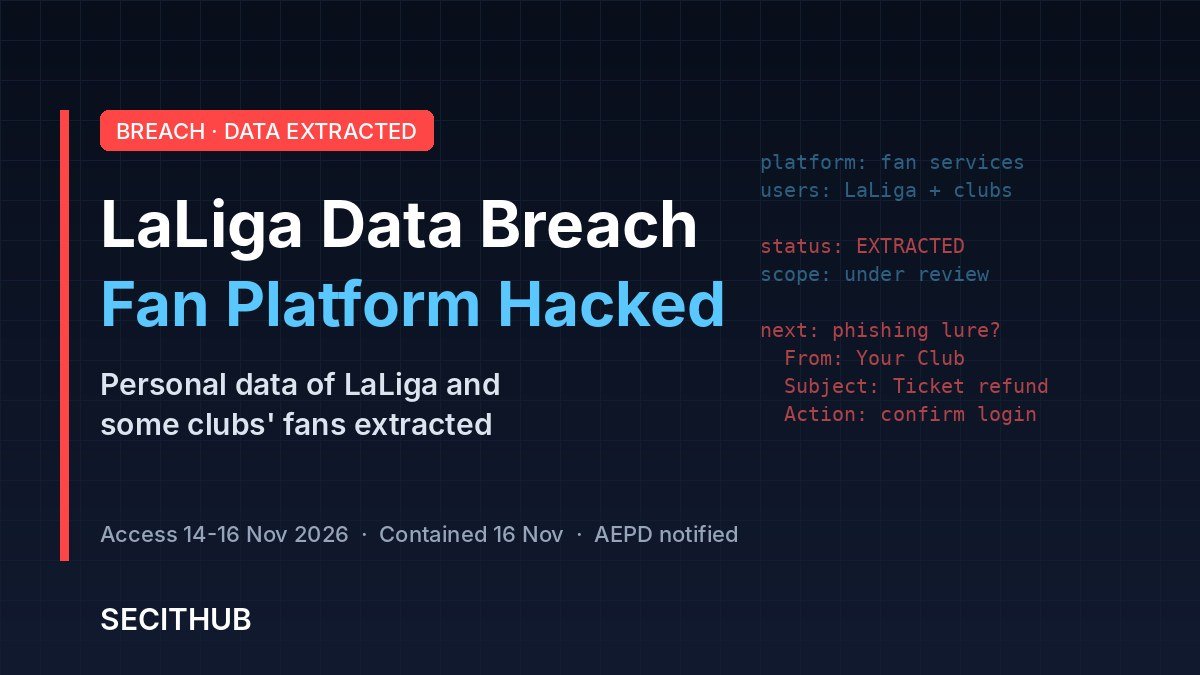
The LaLiga data breach hit one of Spanish football’s fan-services platforms. On 23 November 2026, LaLiga said an attacker had accessed the platform without authorization between 14 and 16 November. The attacker extracted personal data of users registered on LaLiga’s digital services and on those of some clubs. The full extent of the leak is not yet known.
LaLiga says the incident stayed within that one platform. It did not affect the league’s other systems or the competition itself. Still, one platform serving both the league and several clubs means one breach can reach fans of many teams at once.
What Happened in the LaLiga Data Breach
Three Days Inside a Fan Platform
According to LaLiga’s statement, a cybercriminal accessed one of its technology platforms for fan services between 14 and 16 November. During that window, the attacker extracted personal data. LaLiga has not named the platform.
Contained on 16 November
LaLiga became aware of the attack on 16 November. Its security teams identified how the intruder got in, stopped the data extraction and blocked the attacker. They are now analyzing activity on the platform to work out what data was taken and how many users are affected. LaLiga has also increased monitoring of its digital services.
Regulators and Police Informed
LaLiga notified the Spanish Data Protection Agency (AEPD). It also filed a complaint with the National Police’s Central Cybercrime Unit, which is investigating. The affected clubs have been informed, according to Spanish news agency EFE.
One shared platform. One break-in. Fans of many clubs exposed.
What We Know and What Is Still Unclear
- Personal data was extracted, not just viewed
- Users of LaLiga and some clubs are affected
- The attack ran from 14 to 16 November 2026
- The AEPD and National Police are involved
- Which data fields were stolen
- Whether passwords or payment data were involved
- How many fans and which clubs are affected
- Who the attacker is and how they got in
Extracted, Not Just Viewed
The wording matters. Some recent breaches, like the Austrian Foreign Ministry hack, involved records that attackers viewed. LaLiga says data was extracted. That means a copy of the data likely now sits outside LaLiga’s control.
Silent on the Details
The statement does not list the data types. It does not say whether passwords or payment details were included. It also does not say whether LaLiga will contact affected fans directly. Until LaLiga shares more, fans should assume their basic contact details are exposed.
Why Fan Data Is a Prime Target
Fans Trust Their Club
Football fans open emails from their club. They expect messages about tickets, memberships, merchandise and streaming. That trust makes stolen fan data perfect for phishing. A fake “ticket confirmation” or “membership renewal” email looks normal to a loyal supporter.
Big Matches, Big Scams
Scammers time their campaigns around major fixtures, ticket releases and the holiday shopping season. With real names and emails, they can personalize these lures. The same tactics show up every November, as we described in our guide to Black Friday scams in 2026.
Shared Platforms, Shared Risk
Leagues often run digital services that clubs plug into. That saves money and effort. It also concentrates risk. When the shared platform falls, every club that uses it shares the impact. The pattern is the same as in other supply chain incidents, such as the Optimizely supply chain attack.
A loyal fan clicks fast. Attackers know it.
What Fans Should Do After the LaLiga Data Breach
LaLiga has not published advice for users yet. These steps are sensible for anyone registered with LaLiga or a club’s digital services:
- Distrust urgent club emails. Be careful with messages about tickets, refunds or account problems, even if they use your name.
- Go direct, not through links. Log in through the official app or by typing the website address yourself.
- Change reused passwords. If you used your LaLiga or club password anywhere else, change it there first.
- Turn on two-factor authentication wherever your club or the league offers it.
- Watch for fake support calls. Real support staff will never ask for your password or a one-time code.
- Check your bank statements if you ever saved a card on a league or club service.
Lessons for Organizations
Under the GDPR, organizations must report a personal data breach to the regulator within 72 hours of becoming aware of it, where it poses a risk to people. They must also tell affected people without undue delay when the risk is high. Beyond compliance, three lessons stand out. First, map every platform you share with partners and what data each holds. Second, monitor for large or unusual data exports, not just for logins. Third, prepare clear, fast guidance for customers, because attackers move quickly once data is out. For tools that cover data protection and monitoring, see our Cybersecurity Vendor Landscape.
Support your club. Verify its emails.
An attacker accessed one of LaLiga’s fan-services platforms between 14 and 16 November 2026 and extracted personal data of users registered on LaLiga’s digital services and those of some clubs.
LaLiga has said personal data was extracted but has not listed the data types. It has not said whether passwords or payment details were involved.
LaLiga has not named the clubs. It said users of some clubs’ digital services were affected and that the clubs have been informed.
No. LaLiga says the incident was limited to the one fan platform and did not affect its other systems or the competition.
LaLiga notified the Spanish Data Protection Agency and filed a complaint with the National Police’s Central Cybercrime Unit, which is investigating.
Be wary of emails, texts and calls about tickets or accounts, log in only through official apps or typed addresses, change any reused passwords and turn on two-factor authentication.
Sources
Reuters via The Star: LaLiga data extracted in cyber attack
EFE via Infobae: Un ciberataque en una plataforma de LaLiga afecta a datos de aficionados (Spanish)
El Desmarque: LaLiga statement on the cyberattack (Spanish)
GDPR Article 33: Notification of a personal data breach