Why Securing CI/CD Pipelines in 2025 with DevSecOps Is Critical for Every Organization
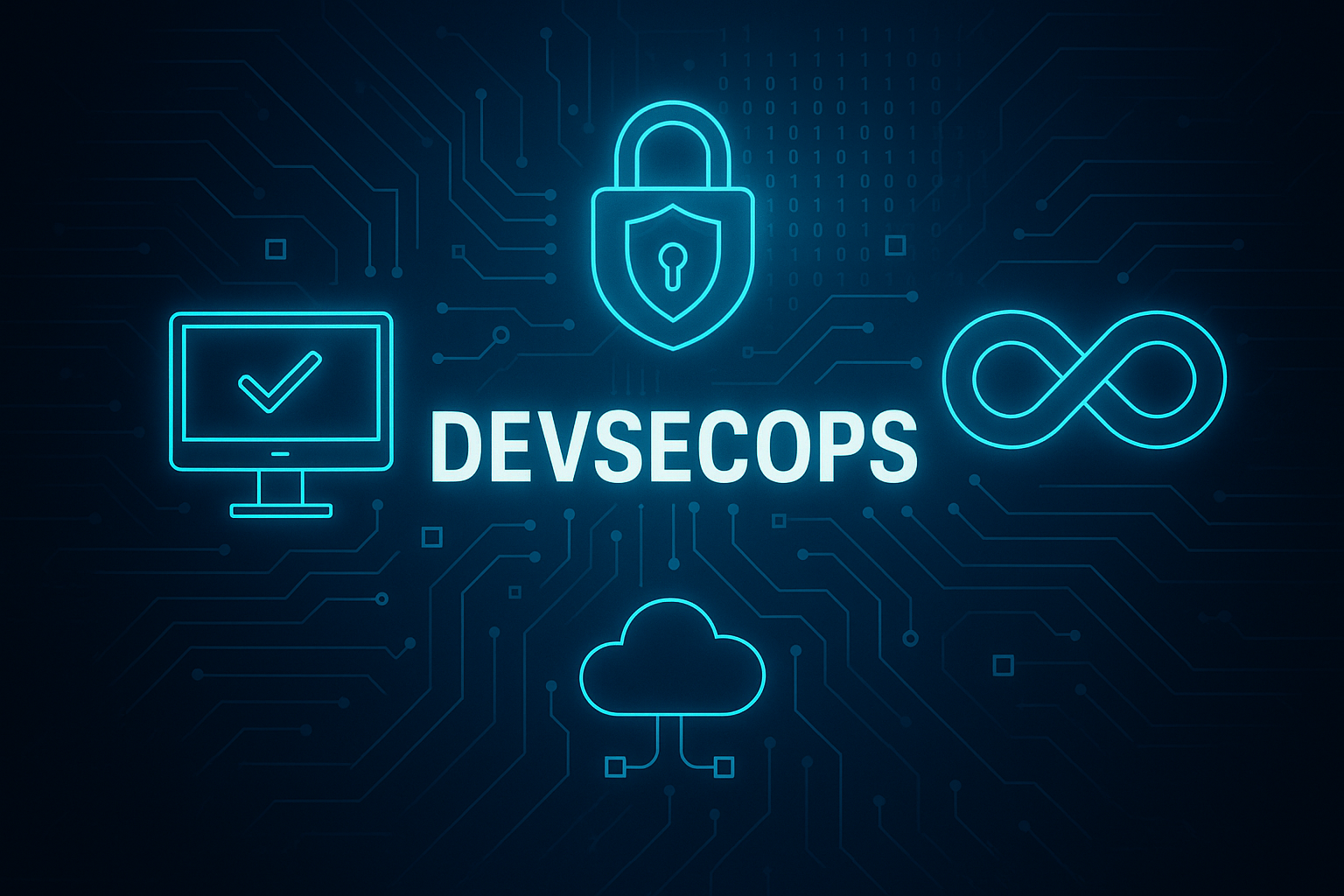
Futuristic DevSecOps pipeline with security shields and cloud icons

Securing CI/CD pipelines through DevSecOps is essential to prevent supply-chain attacks, credential leaks, and code tampering in modern software development.By embedding security checks, secrets management, and continuous monitoring into every stage of integration and deployment, organizations ensure that innovation and protection evolve together.DevSecOps isn’t a toolset it’s a cultural and operational framework that turns every developer and operator into a guardian of code integrity. Continuous Integration and Continuous Delivery (CI/CD) pipelines have become the engine of modern software development. They enable rapid innovation, frequent releases, and automation that allows small…

Read More

API Security | Protecting the Digital Backbone of Modern Applications

API Security architecture visualization with secure gateways, authentication tokens, and data protection layers

The Growing Importance of API Security APIs are the foundation of modern digital ecosystems, enabling seamless integration between applications, services, and devices. However, their widespread adoption also makes them a prime target for cyberattacks. API vulnerabilities, ranging from broken authentication to injection attacks, expose organizations to data breaches, operational disruptions, and compliance violations. A recent study by Salt Security revealed that API attacks have increased by over 400% in the last two years, with 94% of organizations experiencing API-related security incidents. Given the rising dependence on APIs, organizations must adopt…

Read More

The Critical Importance of Application Security | Addressing Emerging Threats

A computer screen secured with a heavy chain and padlock, symbolizing cybersecurity and data protection

The Evolving Threat Landscape Recent developments in cybersecurity have underscored the growing risks associated with application security, as attackers continue to exploit vulnerabilities in enterprise applications, APIs, and cloud environments. With the proliferation of zero-day exploits and API-based attack vectors, organizations are facing an increasingly sophisticated threat landscape that demands proactive security measures. A recent study by Veracode revealed that over 76% of applications contain at least one security flaw, with nearly a quarter of them classified as high-severity vulnerabilities. These security gaps highlight the urgent need for enterprises to…

Read More

DevOps Security | Bridging the Gap Between Speed and Protection

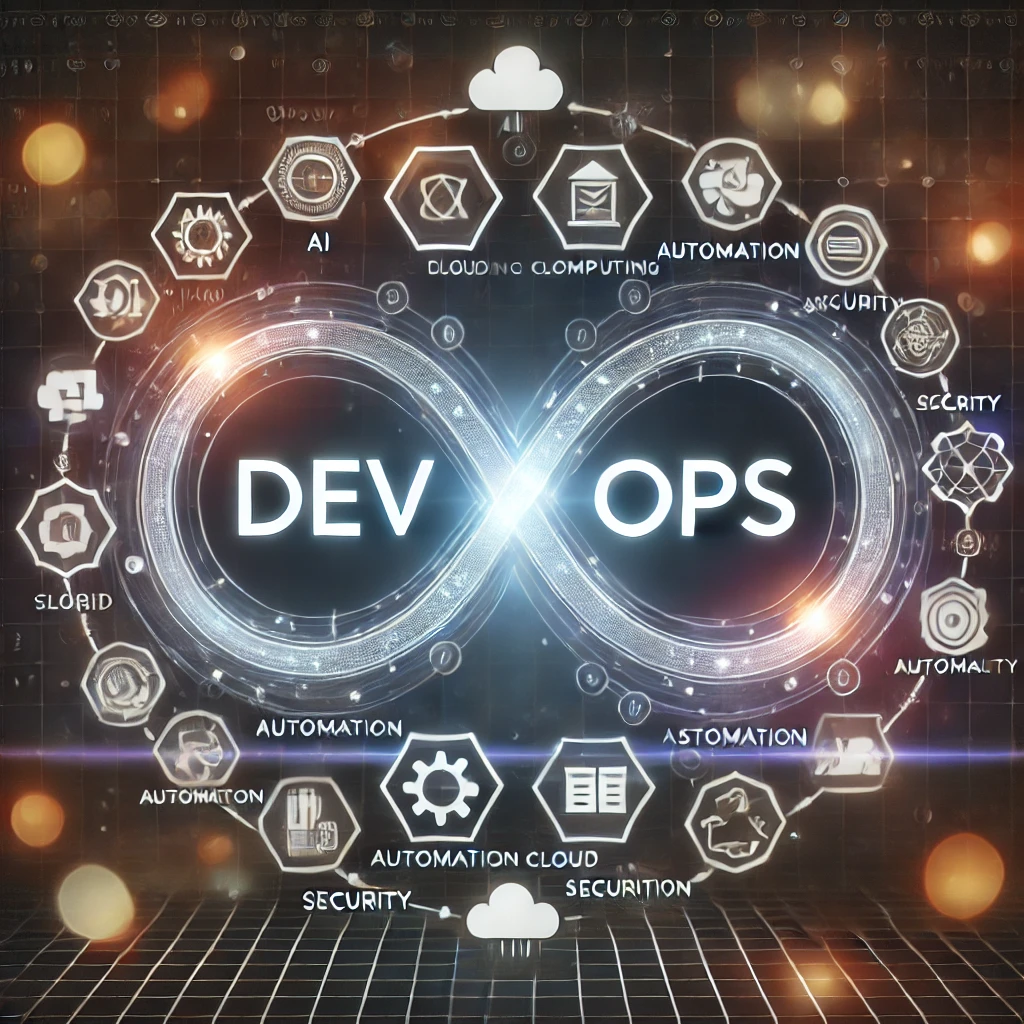
DevOps infinity loop with AI, automation, cloud computing, and security icons

The Growing Importance of DevOps Security As organizations embrace DevOps methodologies to enhance software development and deployment speed, security often lags behind. DevOps enables rapid innovation, but without proper security integration, it also introduces new attack vectors, misconfigurations, and compliance risks. A report by Gartner predicts that by 2025, 99% of cloud security failures will be the customer’s fault, often due to mismanaged DevOps pipelines. This highlights the urgent need for a DevSecOps approach—embedding security directly into the DevOps lifecycle rather than treating it as an afterthought. Why Traditional Security…

Read More

Open Source Risk Management | Expert Insights from Zvika Ronen, CTO of FOSSAware

Open laptop displaying code with a glowing open padlock icon and the words Open Source above it

To gain a deeper understanding of these challenges and how companies can address them, we explored insights from Zvika Ronen, CTO of FOSSAware, a recognized expert in open source governance, risk management, and compliance. His experience in tech due diligence, OpenChain compliance, and ISO/IEC 5230 assessments sheds light on how organizations can integrate open source software securely and responsibly. This article examines real-world risks, evolving regulations, and industry best practices to help companies improve their open source risk management strategies. Why Open Source Can Be a Hidden Risk for Companies…

Read More

Building a Secure Software Development Lifecycle (SDLC)

Development Lifecycle pipeline integrating code analysis, threat modeling, and automated testing

Organizations can minimize cyber risks by embedding security controls at every stage of software development. Here’s how: Secure Architecture & Design Implement Zero Trust security models.Enforce least privilege access (LPA) for developers and admins.Integrate Threat Modeling early in the development process. Secure Coding Practices Enforce secure coding guidelines (OWASP Top 10).Implement code reviews and static application security testing (SAST).Use memory-safe languages like Rust instead of C/C++. Continuous Security Testing Perform penetration testing (pen-testing) on applications.Automate dynamic application security testing (DAST).Monitor for runtime security anomalies with extended detection and response (XDR).…

Read More

Enhancing Application Security: Strategies for 2025

Futuristic 2025 cybersecurity shield with digital elements.

Application security is paramount. As organizations increasingly rely on software applications to drive business operations, the need to protect these applications from cyber threats has never been more critical. his article explores the evolution of application security, common threats, and effective strategies to safeguard applications in 2025. The Evolution of Application Security Application security has evolved significantly over the years. Initially, security measures were often implemented as an afterthought, addressed only after applications were deployed. However, as cyber threats became more sophisticated, integrating security into the development process became essential.…

Read More